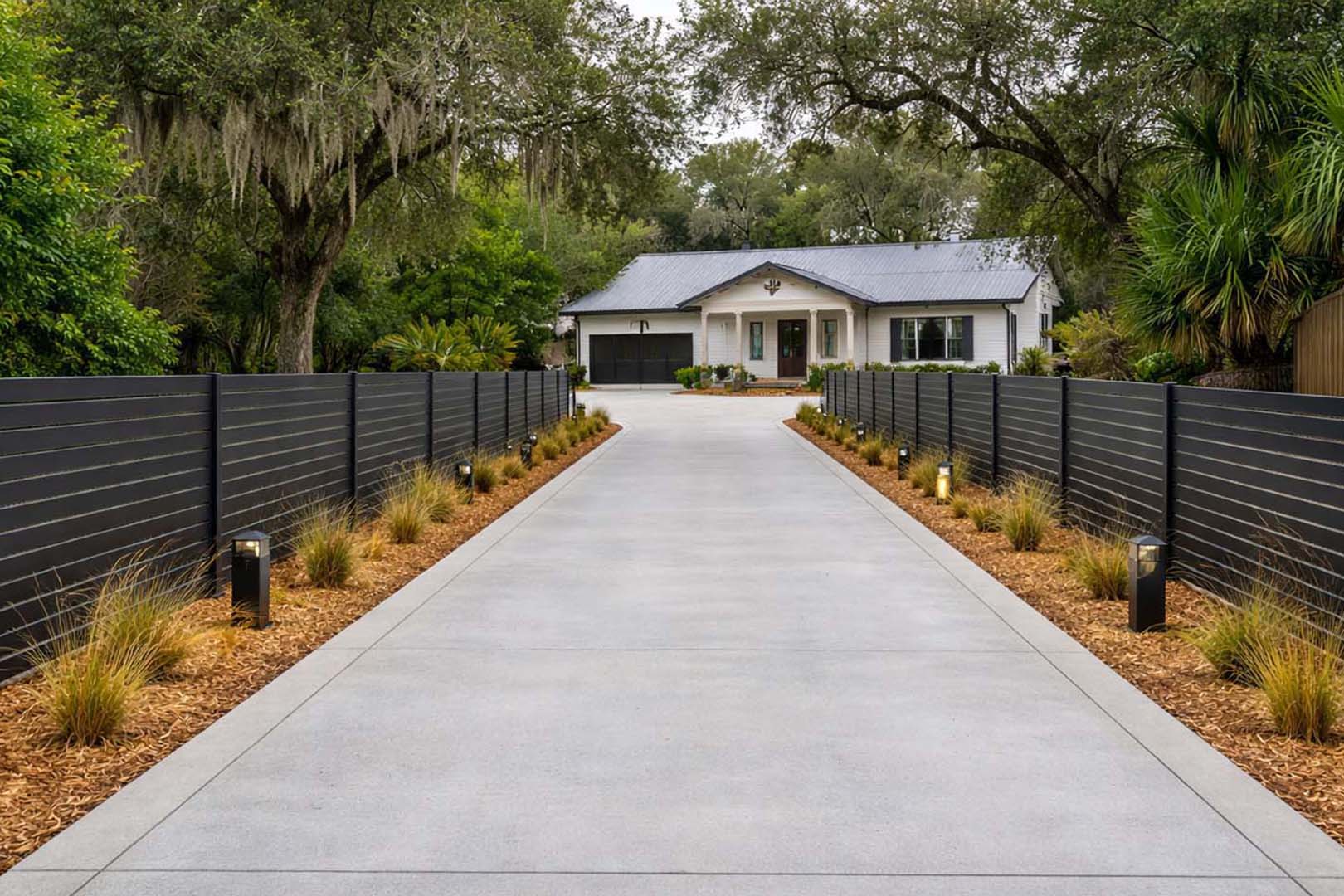
Colorado Wildfire Resiliency Code: What It Means for Your Fence

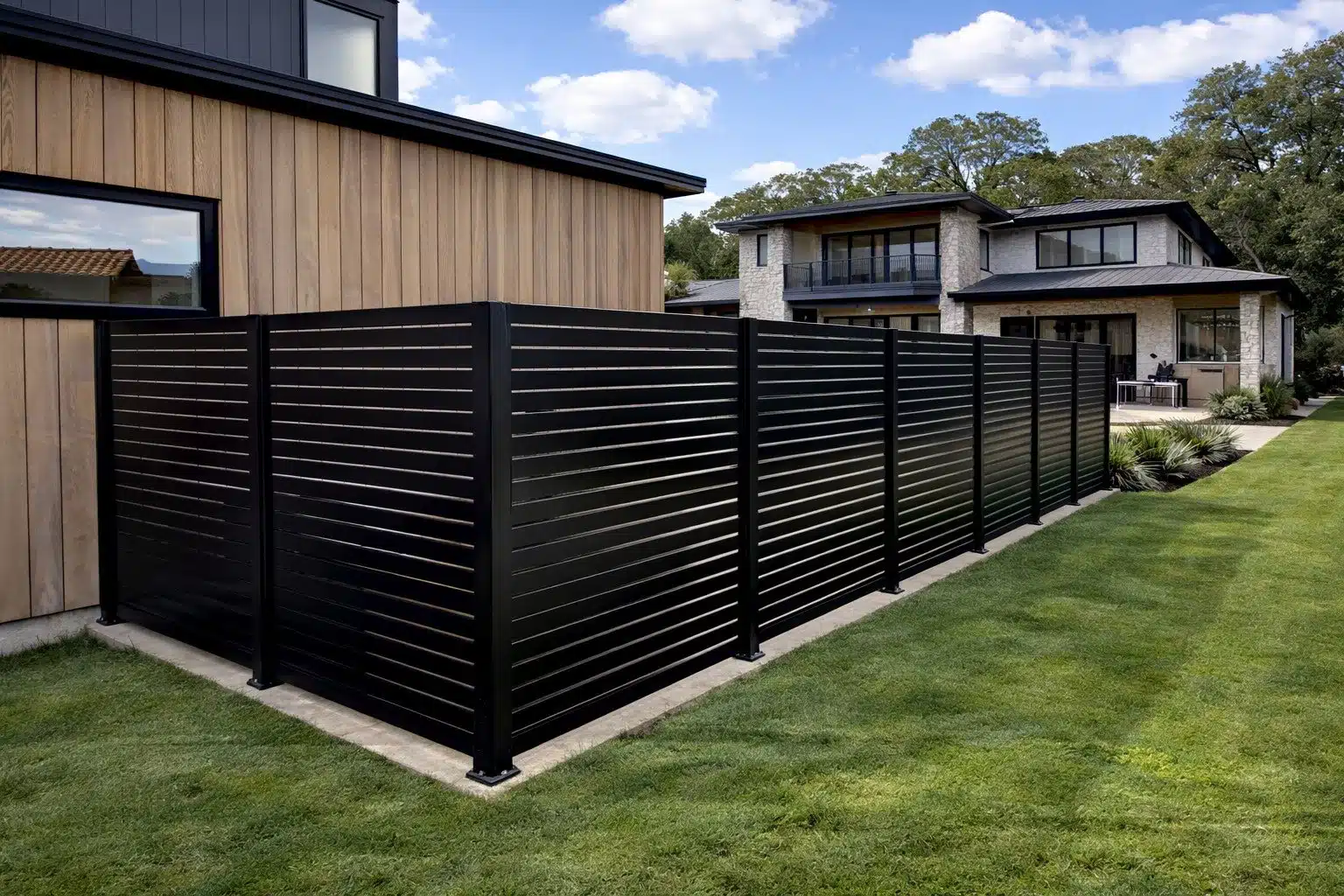
Short answer: under Colorado’s Wildfire Resiliency Code, any new or replacement fence within 8 feet of your home in a wildland-urban interface (WUI) area must be built from noncombustible or ignition-resistant materials. Local governments had to be enforcing it by July 1, 2026. Aluminum is noncombustible, so an aluminum fence meets the rule. Wood near the house does not.
Written in October 2026, using the state code and the enforcement dates in place at the time. Codes get updated, and each county or city can adopt its own version, so check the current rules with your local building department before you build.
If you live along the Front Range foothills, in the mountains or on the Western Slope, there’s a good chance this applies to you. It’s also one of the easiest parts of the code to get right, because it only covers the fence closest to your house.
Here’s what we’ll cover:
- What the Colorado Wildfire Resiliency Code is and when it took effect
- How to check whether your home is covered
- Exactly what it says about fences, including the vinyl question
- How fence materials compare, and what a compliant fence looks like
What Is the Colorado Wildfire Resiliency Code?
In 2023, Colorado passed a law (SB23-166) creating a statewide Wildfire Resiliency Code Board. The Board adopted the 2025 Colorado Wildfire Resiliency Code on July 1, 2025. Every city and county with WUI areas had to adopt it by April 1, 2026 and be enforcing it by July 1, 2026. A bill to push those deadlines back a year failed in committee in April 2026, so the dates stand.
The code sets minimum standards for building and landscaping in areas where homes meet wildland. Counties and cities can adopt stricter versions, and several have.
Does It Apply to Your Home?
It applies to properties inside the WUI on the state’s wildfire hazard map, which you can search by address. The map sorts properties into two classes:
- Class 1: lower-hazard areas
- Class 2: moderate- and high-hazard areas, with stricter building rules
The fence rule applies in both classes. Some local governments have drawn their own maps or widened the WUI. Jefferson County, for example, extended its boundary out into the plains, and Garfield County removed an exemption for 35-acre parcels. The safest step is to check your address on the Colorado Division of Fire Prevention and Control’s code page and confirm with your local building department.
What the Code Says About Fences
Section 502.4.1 covers fences within 8 feet of a structure regulated by the code. In practice:
- Within 8 feet of the house: the fence must be noncombustible or ignition-resistant. If your property line is closer than 8 feet, the rule runs to the property line.
- More than 8 feet from the house: exempt. The rest of your yard can be any material.
- Existing fences: the code is aimed at new work. A fence that was legal before your area adopted the code can generally stay, unless officials consider it a distinct danger. Replacing it or building new means meeting the rule.
- Gates: a gate in that 8-foot zone is part of the fence, so plan it in the same material.
- Permits: some counties now require a permit for fences near structures. Garfield County requires one for any fence within 8 feet of any structure.
That 8-foot zone matters because a fence attached to a house works like a fuse. Embers land along a wood fence line, it catches, and the fire walks straight to your siding. Making the last 8 feet noncombustible breaks that path.
What About Vinyl?
This is where a lot of people get tripped up. The state code says vinyl fencing “may be allowed.” That’s a discretionary call by your local building official, not an automatic pass. Jefferson County’s version of the code doesn’t include the vinyl allowance at all. Vinyl is a plastic, and it softens and melts in heat.
If you want certainty, choose a material that is noncombustible by nature. Aluminum is.
A Noncombustible Fence, Proven on Camera
Aluminum will not ignite, adds no fuel to a fire and won’t carry flame along a fence line. In our fire test video, we hold a torch to a wood fence and a QuickScreen panel side by side. The wood ignites in seconds. The QuickScreen aluminum comes through untouched.

How Fence Materials Compare Within 8 Feet of Your Home
| Feature | QuickScreen Aluminum | Wood | Vinyl / PVC | Wrought Iron / Steel |
| Burns? | No; noncombustible | Yes | Plastic; melts and burns | No |
| Within 8 ft under the Colorado code | Meets the rule | Untreated wood doesn’t meet it | “May be allowed”; check locally | Meets the rule |
| Privacy | Fully adjustable, solid to open | Solid or picket | Solid or picket, fixed at purchase | Open pickets only |
| Upkeep | Occasional rinse | Stain or seal every few years | Low, but UV makes it brittle | Rust treatment and repainting |
| Wind | Up to 170 mph (4″ HD posts) | Varies; posts rot and lean | Varies; steel inserts common | Varies by manufacturer |
| Finish warranty | 20 years on the powder coat | None | Varies | Varies |
Wrought iron also meets the rule, but it only comes as open pickets, so it gives you no privacy. QuickScreen gives you a noncombustible fence that can be fully private, semi-private or open, depending on the slat and gap you choose.
Built for Colorado Conditions
Fire isn’t the only thing a Colorado fence has to handle. QuickScreen aluminum won’t rot after a wet spring, crack in a freeze or need re-staining after a summer of high-altitude sun. With 4″ heavy-duty posts, it’s rated for winds up to 170 mph. It carries a limited lifetime warranty on the aluminum and a 20-year warranty on the powder-coated finish.
You Don’t Have to Replace the Whole Fence
Because the rule covers only the 8 feet next to the house, many homeowners start there. They replace the returns and the gate near the house in aluminum and leave the far side of the yard for later. QuickScreen slats cut to length on site, so short returns and odd widths are straightforward.
Pricing is published, not hidden. A 6-foot-high QuickScreen fence runs about $104 to $138 per linear foot for materials. See the full breakdown in our cost per foot guide, or build a parts list with the fence calculator.
A Note for Builders, Architects and Fence Contractors
If you’re building or remodeling in a Colorado WUI area, the fence detail within 8 feet of the structure is now part of the permit conversation. QuickScreen gives you a noncombustible specification with a modern look clients actually want. Spec sheets and drawings are on our technical documents page, and trade buyers can open a wholesale account for preferred pricing.
Frequently Asked Questions
Do I have to replace my existing wood fence?
Generally no. The code is aimed at new and replacement work, and a fence that was legal when your area adopted the code can usually stay. When you replace the section within 8 feet of the house, it needs to meet the rule.
Does the rule apply to my whole yard?
No. It covers fences within 8 feet of the house (or up to your property line if that’s closer). Fences farther out are exempt.
Is vinyl fencing allowed?
The state code says vinyl “may be allowed,” which leaves it to your local building official. Jefferson County’s version doesn’t include that allowance. Aluminum is noncombustible and meets the rule without an exception.
Does an aluminum slat fence meet the Colorado code?
Yes. Aluminum is a noncombustible material, which is what the code requires within 8 feet of the house.
How do I know if my home is in the WUI?
Search your address on the state wildfire hazard map linked from the Colorado Division of Fire Prevention and Control’s code page, then confirm with your city or county building department, since some have their own maps.
This guide summarizes the 2025 Colorado Wildfire Resiliency Code as of October 2026. It isn’t legal advice, and local versions differ. Confirm the requirements for your address with your local building department.
Get a Code-Ready Fence Shipped to Colorado
We ship QuickScreen aluminum fence and gate systems to Colorado and across the United States. Browse our aluminum fence and gate panels, see completed projects in the gallery, or send us your project details.
Request a quote, call (469) 817-3385 or email sales@foundationfencesupply.com. And when you talk to your fence contractor, builder or landscaper about your next project, ask them about Foundation Fence Supply.