
Aluminum vs. Composite vs. Wrought Iron Fence

Choosing a fence is a big decision. It frames your home and ideally stays there for many years quietly doing its job. Style, material, durability, visibility and safety are just a few of the things homeowners have to consider when choosing a new fence, and once the search for a premium solution has been narrowed down it normally comes down to three options: aluminum, composite, and wrought iron.
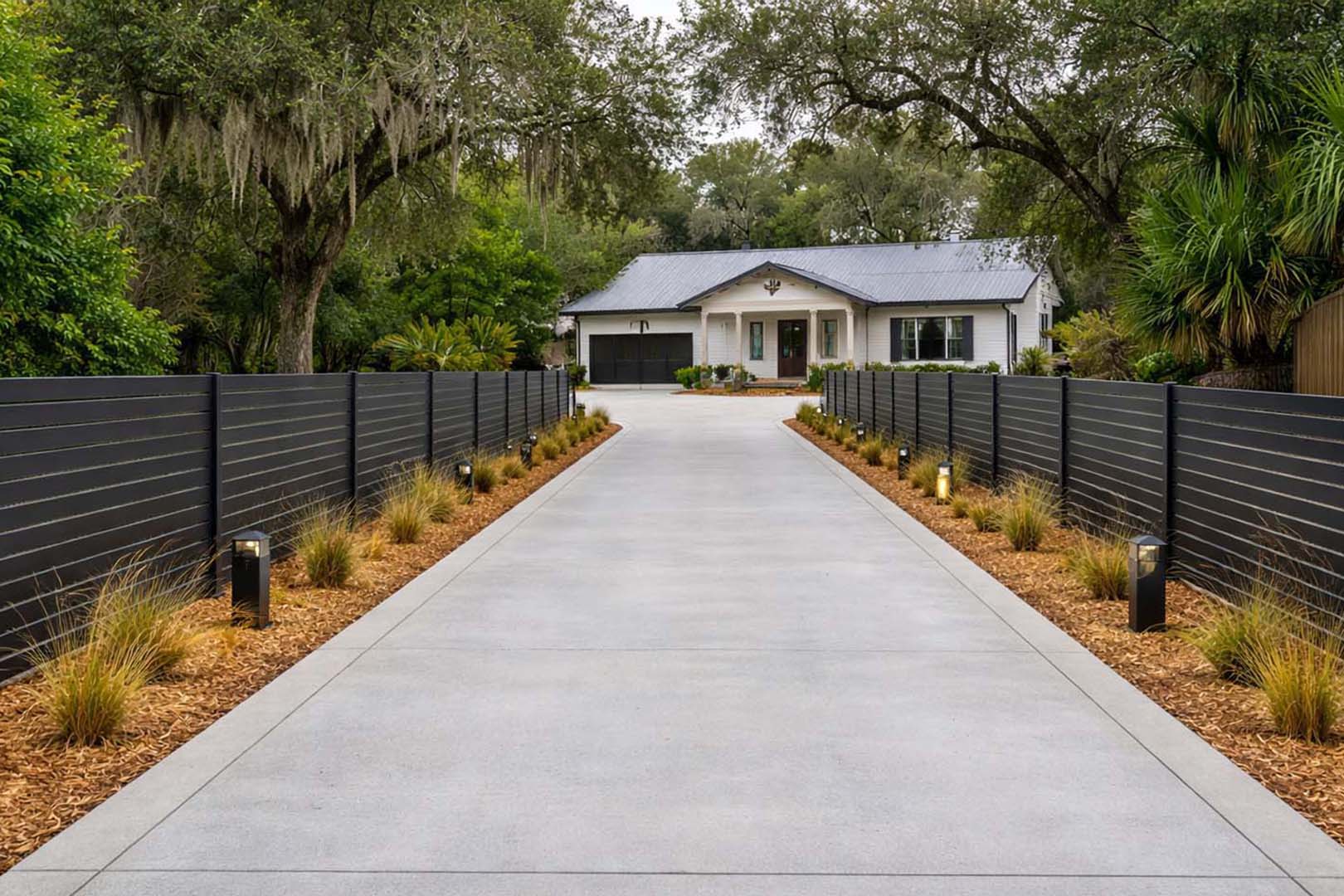
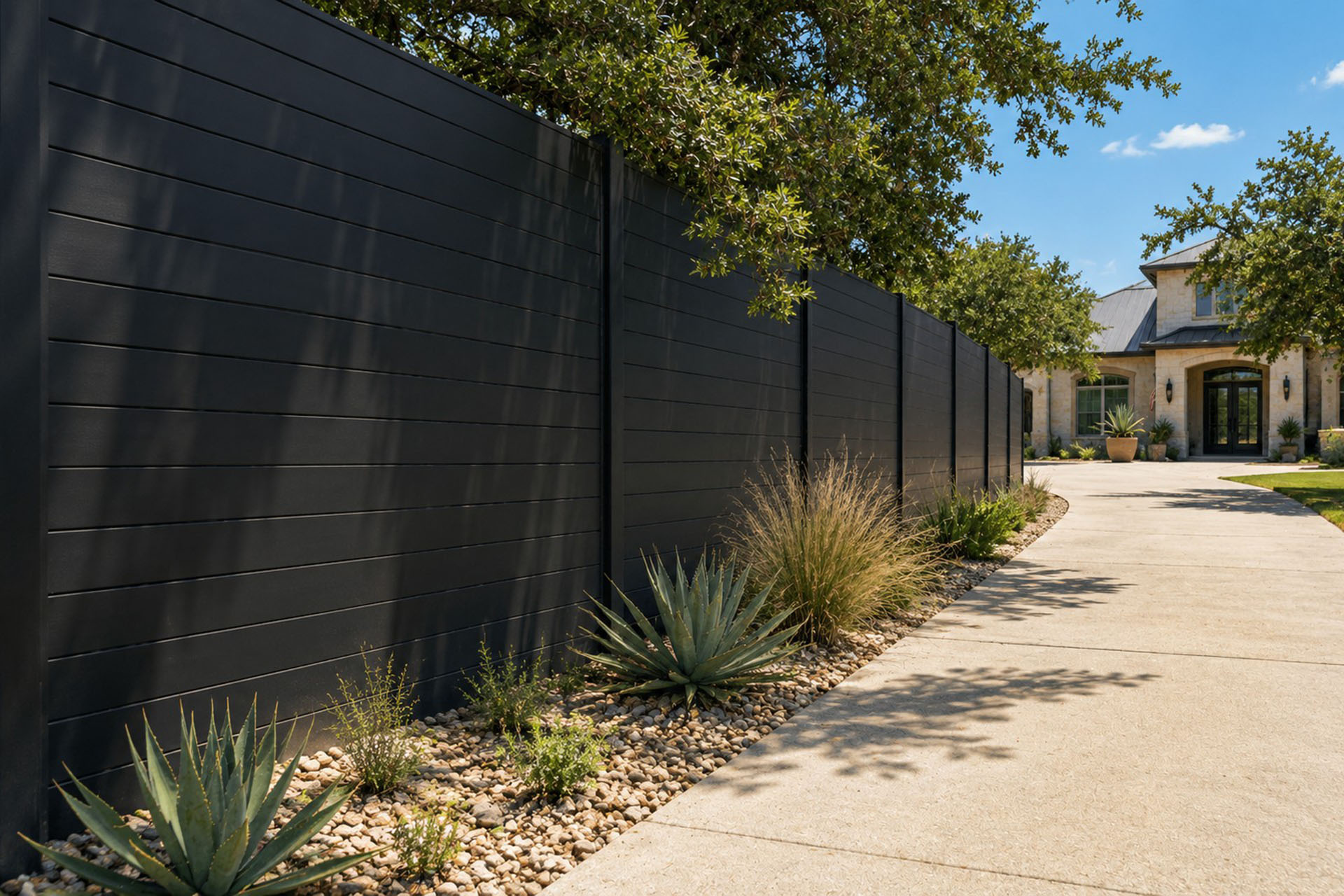
Here’s the short version. Composite gives you the look of privacy but comes with weight, warping and a shorter lifespan. Wrought iron gives you strength but rusts, requires repainting, and offers little privacy. Aluminum horizontal slat fencing gives you a clean modern aesthetic without the maintenance tax either alternative charges you for years after installation.
Aluminum vs. Composite vs. Wrought Iron: Quick Comparison
Before the detail, here’s how the three premium fencing materials compare at a glance:
| Feature | QuickScreen Aluminum | Composite | Wrought Iron |
| Wind Rating | Up to 170 mph (4″ HD posts) | ~100 mph typical | Varies; heavy but open |
| Rust / Corrosion | Cannot rust | Steel frame can rust | Rusts; needs upkeep |
| Finish Warranty | 20-yr powder coat (AAMA 2604) | Structure only; fade excluded | Repainting required |
| Fade Resistance | Holds color under warranty | Fades; not covered | Paint fades/chips |
| Maintenance | Occasional rinse | Low; heat movement | High; sand & repaint |
| Privacy Control | Adjustable spacing | Fully private | Open pickets |
| Fire Behavior | Non-combustible | Combustible | Non-combustible |
| Install Speed | Up to 3x faster; no welding | Moderate | Slow; skilled welding |
| Aesthetic | Modern, architectural | Wood look-alike | Classic/traditional |
Aluminum vs. Composite
Composite is a blend of plastic and wood fibers (typically 95% recycled content) designed to mimic wood but without the rot. Composite solutions have strong warranties and genuinely perform better than wood, but when compared to modern aluminum slat there are several tradeoffs to be aware of.
- Wind performance. This matters in Texas! Leading composite systems are designed to withstand up to 100 mph winds while QuickScreen’s heavy-duty post configuration can handle up to 170 mph, backed by stamped engineering drawings. Be it Gulf storms or plains straight-line winds, the difference is significant, especially if the worst happens.
- Fade (and what your composite warranty actually covers). Composite is a pigmented wood-plastic mix, and what do wood and plastic do? They fade. To that end, manufacturers openly acknowledge that the color lightens and weathers over time, and if you read the fine print you will see that color fading is not covered by warranty. QuickScreen aluminum is different: the powder-coat finish (AAMA 2604 standard) carries a 20-year warranty on the finish itself, so the color you choose is the color you keep.
- Heat and warping. When composite gets hot it absorbs heat and expands. In a state where the temperature reaches the high 90s for most of the summer, that is why composite systems often need ugly back-bracing rails. Aluminum holds its shape. That means no swelling in the heat, no contraction in the cold, and those clean, sleek lines you paid for staying exactly as you like them.
- The frame is the real weak point. Most horizontal composite systems depend on a metal frame to hold the boards. That is normally made from galvanized steel, which can rust. The QuickScreen system is aluminum throughout, so there’s no rust. That is a real advantage, especially for pool screening and humid environments.
- Fire. The wood fiber and plastic in composite is combustible. Aluminum is non-combustible, which means it won’t catch fire. In wildfire-aware parts of Texas, that’s an important consideration.
- The look. Composite is designed to look like stained wood, and if that’s what you want it does a good impersonation. If you want a modern aesthetic with clean lines, spacing options and gate configurations that you can tune to the exact look you want, aluminum slat is the answer. It’s the look that makes people stop and ask who did it.
Aluminum vs. Wrought Iron
Wrought iron is a classic: strong, beautiful and with a nice traditional look. Unfortunately it also comes with baggage.
- Rust. Rust is iron oxide, and that happens in humid Texas air anywhere near a pool, sprinkler or the Gulf Coast. It can be sanded and repainted, but rust is unavoidable and an ongoing cost and chore. Aluminum chemically cannot rust. Ever. That single difference makes it a very attractive option to homeowners.
- Repainting and upkeep. To keep its aesthetic appeal, wrought iron needs to be repainted periodically. A powder-coated aluminum fence keeps its color for decades under warranty with nothing more than an occasional rinse.
- Privacy. Some homeowners like pickets with wide open gaps that secure a perimeter but do nothing for privacy. Others don’t. With aluminum horizontal slat fencing from QuickScreen you can decide. Run the slats together for full privacy, add 3/8″, 1/2″, 1″ spacers or even larger gaps if you want some airflow and light while still screening sightlines. Get the security and strength of a solid metal fence and the privacy of a solid panel, all in one system.
- Weight and installation. Wrought iron is heavy and typically requires skilled welding. That drives up cost and install time. With QuickScreen’s patented friction-fit assembly with no visible screws or welding, the install time can be up to 3x faster than traditional fencing. Lower labor cost, less disruption and a clean finished look.
The Maintenance Math: True Cost Over 20 Years
As a homeowner it’s sometimes easy to forget that the lifetime cost of a product often includes much more than the upfront cost: rust management, repairs, repainting, heat-driven warping and movement, color fade and weather damage. With aluminum you rinse it occasionally to wash away the dust. That’s essentially it.
When you spread the cost over 20+ years, the option with the lowest upfront cost can actually become the most expensive. QuickScreen’s low maintenance and long-warrantied aluminum make it the value play.
Ready to price an aluminum fence? Our QuickScreen fence calculator turns your measurements into a full material list in a few minutes. You can also browse aluminum slat fence panels and matching single gates, or see how the system installs.
Frequently Asked Questions
Is aluminum fencing better than composite?
For many Texas properties, yes. Aluminum resists higher wind loads (up to 170 mph vs. around 100 mph), doesn’t fade out of warranty or warp in the summer heat, and has no steel frame to rust. Some homeowners like the wood look that composite gives them, but aluminum wins on durability, long-term maintenance and, for many people, style.
Does aluminum fencing rust?
No. Aluminum does not rust as it doesn’t contain the iron required for iron oxide (rust). That makes it ideal for pool areas, humid environments and especially coastal environments.
How long does aluminum fencing last?
QuickScreen’s quality powder-coated aluminum system carries a 20-year finish warranty (AAMA 2604 standard) and a limited lifetime warranty on the structural aluminum. That means it’s built to last for decades with minimal upkeep.
Is aluminum fencing fire resistant?
Aluminum is a non-combustible material, which means it will not ignite and feed a fire, unlike wood or wood-plastic composite.
Is aluminum fencing more expensive than composite or wood?
At Foundation Fence Supply, we sell QuickScreen USA aluminum slat fencing at very competitive prices. Upfront cost varies by project, but over the lifetime of your fence it often works out far cheaper as there is no need for rust repair, repainting or premature replacement.
What to Ask For From Your Fence Contractor, Builder or Landscaper
If you are drawn to the clean, modern, horizontal look and don’t want to sign up for a lifetime of upkeep, aluminum horizontal slat fencing is the product for you.
Foundation Fence Supply is your source for the QuickScreen aluminum horizontal slat system. Browse our aluminum fence and gate panels, or visit Foundation Fence Supply to learn more. When you talk to your contractor about your next fence or gate, ask them about Foundation Fence Supply — and get the finish that still looks new when your neighbor’s is being repainted.